
If you’re considering a girth enhancement procedure, there’s probably one big question on your mind: “What if I don’t like it?”
Some enhancement procedures you’re stuck with. Others, like a penile dermal filler using hyaluronic acid, give you an easier way to fix what you don’t like. It all depends on what was done, how long ago it was done, and what specifically feels off to you now. Some men want to address asymmetry. Others want to soften an overdone look, smooth a contour issue, or return to a result that feels more natural.
The first step is identifying what you want to change. Only then can you have a useful conversation with a qualified provider. “I don’t like it” doesn’t help anyone get you the result you’re after. Is the concern shape, fullness, proportion, or how it settled over time? The more specific you are, the easier it becomes to discuss your options.
What Usually Needs Correction
Most corrections fall into a few broad categories. The issue may involve unevenness, excess fullness in one area, an outcome that feels too subtle or too strong, or changes that developed as the result settled.
It helps to think of it this way: correction usually focuses on balance. You’re trying to improve:
- Uneven contour or asymmetry
- A result that feels over- or underwhelming
- A look that changed over time
Sometimes the appearance looks different in certain positions or under certain lighting, which can make explaining it a little confusing. None of those concerns automatically means something went seriously wrong. A provider can help you with what to do next.
Start With a Professional Review
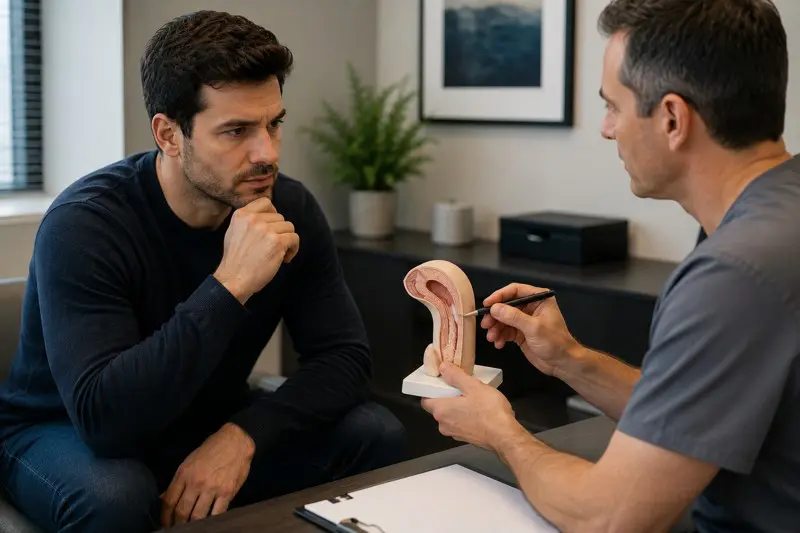
A correction plan begins with an in-person evaluation. This isn’t a one-size-fits-all fix. Two men can have similar frustrations and need very different next steps. A provider will assess the area, review the procedure you had, and understand your goals now.
Bring whatever information you have from the original procedure. That may include:
- Timing
- Technique
- Filler material
- Post-care instructions
- Changes (immediate vs gradual)
Even small details can help. If you don’t have records, be ready to describe the timeline as best you can.
This is also the right time to explain how the result affects you. You may feel self-conscious, frustrated, or hesitant in intimate settings. Your relevant reaction helps the provider correct an enhancement in a way that aligns with your feelings, not just a photo.
Timing Considerations To Keep in Mind
Understandably, many men want to fix what they don’t like immediately. However, timing plays a big role in when you should make changes. In some cases, a provider may advise you to wait until the filler has fully settled before making any decisions. Early swelling, the healing process, and normal settling can distort how things look in the short term.
While you shouldn’t ignore a concern, understand that you may not be in the right correction window. And that depends on where you are in the post-care process. If you act too early, you may correct something that would have evened out with time. If you wait too long without guidance, you may stay stressed longer than necessary.
Again, your best move is to speak to a provider. Ask about timing. They can typically tell you whether your concern needs patience, a follow-up evaluation, or a more active correction plan.
How Correction Decisions Usually Work
Correction decisions tend to fall into three paths. One path is observation and patience while things continue to settle. Another is refinement, in which the goal is to improve symmetry or contour through a gradual adjustment. The third path is reversal or reduction, if that’s appropriate for the type of procedure you originally had.
This is where it helps to find an experienced provider. You want someone who can explain what’s realistic and possible for you. They can also help align you with what level of change makes sense for your anatomy and goals. You’re looking for a thoughtful correction plan, not an aggressive promise for dramatic changes.
Ask what the correction process may involve. An experienced provider can explain how many visits may be needed, what post-care typically looks like, and how treatment could affect work, exercise, travel, or intimacy. Understanding those functional considerations helps you set realistic expectations and decide whether you’re ready to move forward.
What to Avoid If You’re Unhappy
Avoid trying to manage frustrating results on your own. That includes self-massaging without guidance, chasing advice from strangers online, or booking a rushed appointment with whoever promises the fastest fix. Quick reactions often create new problems.
You should also avoid comparing your correction process to someone else’s online story. Different anatomy, different procedure history, and different goals make comparisons useless. Your correction plan should fit your situation, not a post you saw on social media.
If you feel anxious, write down your questions before your consultation. That keeps the conversation productive and gives you something concrete to focus on.
A Better Way to Think About Correction
One major benefit of a non-surgical penile girth enhancement using hyaluronic acid is its reversibility. Providers can dissolve the substance by injecting hyaluronidase. However, not all techniques use the dissolvable filler, and not all providers can reverse what another provider injected.
But know that corrections are about refinement. You and a provider will work together for a look that aligns with your goals now. That process starts with a qualified evaluation and realistic timing.
If a prior girth enhancement procedure no longer feels right to you, take that concern seriously. You don’t need to sit with the discomfort in silence, but you don’t need to rush into a decision either. A conversation with an experienced provider can shed light on the path forward, helping you feel more in control of what happens next.