
You might think that interest in penile enhancement is a modern phenomenon, but the truth is, men have pursued it for centuries. Throughout history, different cultures have explored various ways to modify, enlarge, or enhance the appearance of the penis. Some of those methods were symbolic, others painful, and many were rooted in deeply held beliefs about masculinity, fertility, or social dominance.
Understanding the origins of these practices helps you see how male aesthetics have evolved and how today’s options reflect a significant shift toward safer, more informed approaches.
Ancient Roots: Enhancement as Ritual and Symbol
Long before science entered the picture, enhancement was often tied to ritual. In some tribal societies, including those in Papua New Guinea and parts of Africa, penis modification or extension wasn’t purely cosmetic. It was cultural.
For example, in certain tribes, young men inserted weighted objects into their penile skin or suspended their genitals for prolonged periods in hopes of elongating them. The results were often exaggerated, but the practice reinforced initiation rites and status within the tribe.
Meanwhile, in ancient India, early Ayurvedic texts referenced herbal compounds and exercises intended to promote virility and size. While these weren’t backed by scientific studies, they reflected a long-standing association between sexual prowess and bodily ideals.
Even in ancient Greece and Rome, attitudes around penis size were nuanced. Contrary to what you might expect, smaller genitals were often idealized in sculpture and literature, viewed as a sign of discipline and intellect. Larger sizes were sometimes portrayed comically or associated with lustful excess. So even then, enhancement desires were shaped as much by cultural ideals as by personal desire.
The Middle Ages and Misinformation
By the Middle Ages, much of Europe was dominated by religious teachings that suppressed open conversations about sex. That didn’t mean people stopped thinking about enhancement; it just meant misinformation spread in secrecy. Snake oils, aphrodisiacs, and bizarre remedies claimed to boost size and virility.
You may have encountered tales of medieval potions or rituals that involved animal parts or mystical incantations. These practices were rarely based on physiology and often exploited insecurity. They set the stage for the centuries of snake oil salesmen who would follow.
It’s a reminder that when something matters to you, and you can’t discuss it openly, you’re more vulnerable to harmful or ineffective solutions.
19th Century: Patent Medicines and Early Devices
With the rise of industrialization came a wave of so-called “male rejuvenation” products. The 1800s saw an explosion of tonics, pills, and mechanical contraptions claiming to enhance male performance and size. You might’ve seen historical ads for vacuum pumps, suspenders, or corset-like tools marketed toward men worried about virility.
Of course, none of these inventions were rooted in science. But they reflected a growing market: men who desired control over their sexual image and were willing to pay for it.
What’s important to note is that these products, often unregulated and unsafe, foreshadowed today’s rise in online “solutions” that still bypass evidence-based safety.
The 20th Century: Surgical Frontiers and Controversy
By the mid-1900s, enhancement efforts moved into surgical territory. Some experimental procedures involved inserting fat or silicone into the penile tissue. Others included ligament cutting to affect the visual length of the penis.
Unfortunately, most of these surgeries produced inconsistent results and carried high risks, ranging from loss of sensation to disfigurement. Silicone injections in particular often led to chronic inflammation, migration, or the need for multiple corrective procedures.
As interest in cosmetic surgery grew, so did scrutiny. Medical communities began to debate whether enhancement was a legitimate pursuit or a psychological issue. That discussion remains ongoing today, but it laid the groundwork for better, more transparent patient-provider relationships.
Modern-Day: Aesthetic Science Meets Informed Consent
Today, you’re living in a time when male aesthetics is openly discussed. Non-surgical options like hyaluronic acid-based penile dermal fillers offer a customizable approach that prioritizes proportion, comfort, and minimal downtime. These methods are performed by trained professionals, using materials designed to be metabolized by your body over time.
This shift from drastic, permanent procedures to natural products and reversible techniques is significant. Instead of asking you to risk long-term damage for short-term gain, modern protocols focus on education, anatomy-specific planning, and incremental changes. It’s no longer about chasing size at any cost. It’s about working with your body and your goals responsibly.
The male aesthetic conversation now includes considerations of mental health, sexual well-being, and body image. It acknowledges that you might want to feel more confident, but also that your safety, identity, and autonomy matter.
What History Teaches You About Today’s Choices
Looking at the past, several themes emerge:
- Male enhancement isn’t new. You’re part of a long human history of self-expression and body modification.
- Unsafe shortcuts have always been around, from medieval tonics to unlicensed fillers.
- Knowledge and access to responsible providers are what differentiate today’s options from yesterday’s risks.
This history gives you the clarity to ask better questions, trust your instincts, and seek out procedures that align with your safety and comfort concerns, not just quick fixes or unrealistic promises.
Your Role in the Ongoing Story
Non-surgical male enhancement, like all aesthetic evolution, is still unfolding. You’re not just reacting to societal pressures: you’re also helping reshape the narrative. By making informed choices, asking better questions, and sharing your experiences openly, you can help shape the future of male aesthetics.
You have the ability to redefine what confidence means to you, not just through appearance, but through action, accountability, and care for your own well-being.
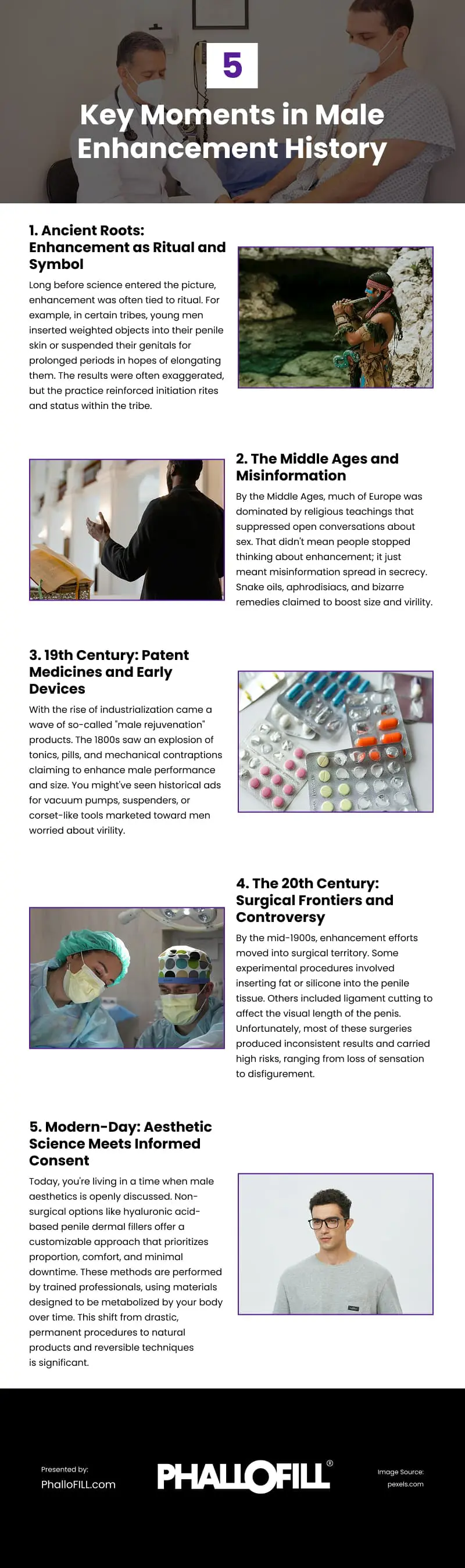
Infographic
While you may think penile enhancement is a modern trend, men have actually pursued it for centuries. Exploring its origins shows the evolution of male aesthetics and highlights today’s safer, more informed options. Check out the infographic to learn more.