When researching hyaluronic acid girth enhancement, you’ll likely learn about volume, see before-and-after photos, and read about the post-care period. What you’re less likely to find is information on the various formulations of HA and why the specific formulation your provider uses is as important as their technique.
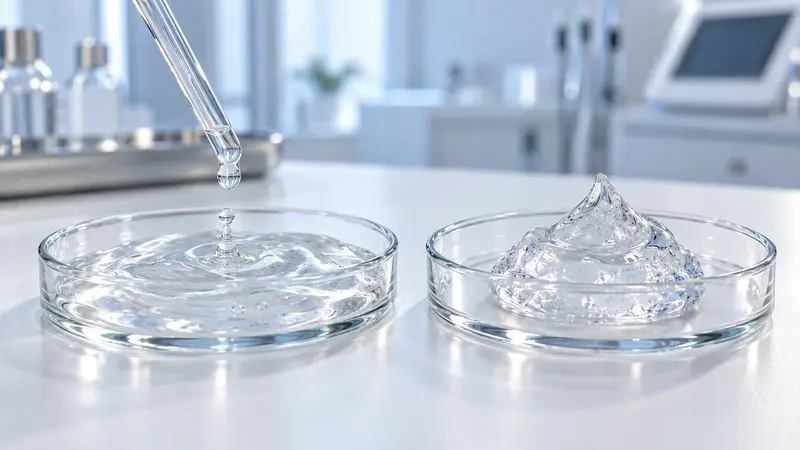
Viscosity, the thickness and consistency of the product, directly affects how the filler integrates with the surrounding anatomy over time. It also impacts how natural the result looks and feels. Lower-viscosity products tend to flow and move more easily, while higher-viscosity products tend to hold their shape more firmly. Understanding this may help explain why some HA fillers produce results that look and feel different from others, even when the procedure appears similar.
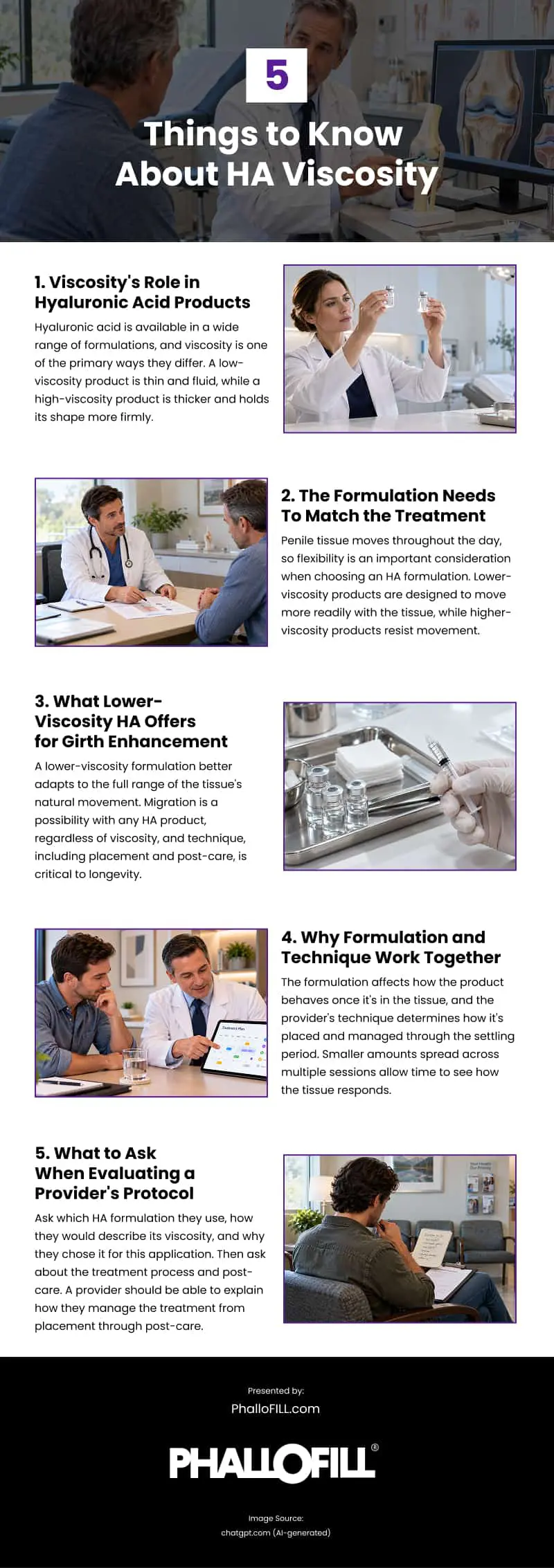
Viscosity’s Role in Hyaluronic Acid Products
Hyaluronic acid is available in a wide range of formulations. Viscosity is one of the primary ways those formulations differ from one another.
A low-viscosity HA product has a thin, fluid consistency. It moves more easily through tissue, integrates with the surrounding anatomy, and tends to produce soft, pliable results. These properties make it well-suited for areas where the tissue moves frequently and a softer result is preferred, such as around the mouth.
A high-viscosity HA product is noticeably thicker. It holds its shape more firmly and resists movement in the surrounding tissue. Those properties are well-suited to structural applications like building out a jawline or adding projection to the cheekbones, where holding a fixed position is exactly what the application requires.
Neither formulation is universally superior. The anatomy being treated determines which is appropriate.
The Formulation Needs To Match the Treatment
Penile tissue moves throughout the day, expanding and contracting as it changes between flaccid and erect states. That makes flexibility an important consideration when choosing an HA formulation.
Higher-viscosity products are designed to hold their shape more firmly and resist movement in the surrounding tissue. That can be useful when the goal is structural support in a relatively stable area. In penile tissue, however, a product that resists movement may not move as easily with the tissue and may feel firmer or less natural.
Lower-viscosity products are designed to move more readily with the tissue.
What Lower-Viscosity HA Offers for Girth Enhancement
In non-surgical penile girth enhancement, a lower-viscosity formulation better adapts to the full range of the tissue’s natural movement. The goal is a result that feels natural as the tissue moves through different states.
Migration is a possibility with any HA product, regardless of viscosity. Migration refers to a product moving away from its intended placement, which can affect the appearance or feel of the result. The particular technique, including placement and the post-care protocol, is a critical component of longevity.
If you had a previous girth enhancement treatment that produced less improvement than expected, did not feel natural, or did not seem to transition well between states, you may want to discuss the formulation with your next provider.
Why Formulation and Technique Work Together
When evaluating a provider, you’ll want to learn about their experience, credentials, and approach. The HA product they use also deserves attention.
The formulation affects how the product behaves once it’s in the tissue. The provider’s technique determines how it’s placed and how the treatment is managed through the settling period. A provider familiar with the specific product they use can adjust placement, session volume, and treatment spacing accordingly.
The amount of HA used also plays a role. Smaller amounts spread across multiple sessions give you and the provider a chance to see how the tissue responds before deciding whether to add more. This gradual approach can also give the product time to settle before another treatment.
Post-care is part of the technique, too. Following the provider’s instructions helps support the treated area as it settles over time.
What to Ask When Evaluating a Provider’s Protocol
Once you understand the role viscosity can play, you can ask more specific questions when evaluating a provider. Beyond asking about credentials and experience with HA, ask about the details of their penile girth enhancement protocol.
Start with the product itself. Ask which HA formulation they use, how they would describe its consistency or viscosity, and why they chose it for this application. If they give you a product name without much explanation, ask how it behaves in tissue and whether its characteristics affect their approach to placement or volume.
Then ask about the treatment process. How do they account for your individual anatomy and the movement of the tissue? Do they build volume over multiple sessions or use a larger amount in a single visit? What determines that approach?
Finally, ask about post-care. Find out what you’ll need to do after treatment and how those instructions support the settling period.
You don’t need to become an expert in HA products before your consultation. A provider should be able to explain which formulation they use, why they chose it for this application, and how they manage the treatment from placement through post-care.
Infographic