
If you are considering a penis enhancement, learning how to take proper and accurate measurements is one skill you’ll want to hone. Measuring only once, or whenever the thought crosses your mind, can yield poor data. You want a repeatable method so that you can compare like with like rather than guessing based on memory, lighting, or mood.
Measurements help you establish a factual baseline. You move beyond relying solely on subjective feelings as data points. You can still connect with how you feel in your body while using the actual numbers to align your expectations. Additionally, you gain the ability to communicate more clearly with a provider.
Start With the Right Mindset and a Repeatable Setup
Before you grab a tape measure, decide what you want your penis measurements to accomplish. The goal is clarity. You are not trying to win a contest or force numbers to tell a story. A slight change in technique can create a big difference in the final number, so the most critical part is repeatability.
Pick a private place, a consistent time, and, when possible, a consistent temperature. A bathroom after a shower may feel convenient, but heat can change your baseline. A room-temperature setting is easier to repeat across seasons. If you plan to measure more than once, use the same setup every time and write it down so you do not have to rely on memory.
You also want to be honest about what you are measuring. “Bigger” can mean different things. Some people care about length, some care about girth, and some care about overall proportions and symmetry. Measuring both length and girth gives you a fuller picture.
What You Need and What You Should Avoid
You do not need fancy tools. You do need the right tools.
A flexible, soft measuring tape is best for girth. For length, a rigid ruler can be easier to keep straight. You can still measure length with only a soft tape, but you will need to take extra care to keep it aligned.
Avoid stretchy fabric tape, as it can cause your numbers to drift. Also, avoid eyeballing with household objects, because you won’t get a clean comparison later.
You can easily create your own measurement kit:
- A soft measuring tape for circumference
- A rigid ruler for length, if available
- A notes app or notebook for logging results
- Optional: a consistent photo setup for visual tracking
That is enough. Anything beyond that tends to add complexity without improving accuracy.
Measuring Length in a Way You Can Repeat
Length measurement sounds straightforward until you try to do it the same way twice. The key decisions are whether to measure along the top side and whether to use a consistent reference point.
Many men use a bone-pressing method to measure erect length. This widely used approach helps standardize the starting point, reducing variation caused by changes in the suprapubic fat pad. Gently press the ruler into the fat pad at the base until you meet the pubic bone. Then, measure to the tip. The most difficult part is applying similar pressure each time.
Flaccid length measurements can vary widely due to temperature, stress, and activity. If measuring while flaccid works best for you, though, take multiple readings over time and average them rather than focusing on a single number.
Use erect length as your primary reference point, since it tends to be the most consistent indicator of any differences over time. You can still note flaccid measurements as supporting information, recognizing that those numbers aren’t as reliable. If you’re not comfortable measuring erect length, that’s okay. Just consistently measure the same place at the same time, and be patient; it may take a little more time to see clear trends.
Measuring Girth Without Inflating the Number
Men often struggle the most with measuring girth. The tape can slide, tilt, or squeeze too tightly. Measuring the same location every time is key. Common options include measuring at the thickest point, the midpoint, and closer to the base. Each tells a different story, so pick one primary location and optionally track a second.
When you wrap the tape, keep it snug but not tight. You should not indent the skin. If you pull hard, you will get a smaller number that isn’t comparable. If you hold it too loosely, you get a larger number that can drift depending on your grip.
It helps to take three girth measurements in the same session, then log the average. If your three readings vary widely, that’s a sign you need to slow down and refine the method.
How to Log Measurements So They Mean Something Later
Run your measurement tracking like a simple science experiment. Have a baseline, a method, and notes about conditions.
Keep it short and consistent. Create a quick log entry that includes date, time, measurement type, and conditions. A sample log entry can look like this: “Saturday, 9:30 PM, room temperature, erect length bone-pressed, midpoint girth.”
For a more visual record, photos can help. Again, consistency is key: use the same lighting, distance, and angle. A quick change in camera height can make the same body look different. If you are using photos, think of them as a companion to measurements, not a replacement.
You can also include notes about anything that might affect your reading, like a hard workout, stress, or alcohol. You are not trying to judge yourself. You are just giving future-you context.
Timing Your Before and After Measurements
If you are measuring before and after a penis enhancement procedure, timing matters. Establish a baseline before the procedure. Then re-measure at regular intervals to monitor healing and any differences.
Avoid taking constant measurements. That usually increases anxiety and reduces accuracy. Instead, choose a schedule you can stick to. For example, you might measure once per week for a month before your procedure to establish a baseline range. Then, after your procedure, measure at consistent intervals as directed by your provider’s post-care protocols and guidance.
Carefully follow your enhancement provider’s instructions about when to resume normal activities or when to avoid certain behaviors. Measuring too aggressively or too frequently can lead to inconsistent readings. It can also pull your attention away from the bigger picture of how you feel and how you are adjusting.
How to Use Your Measurements in a Provider Conversation
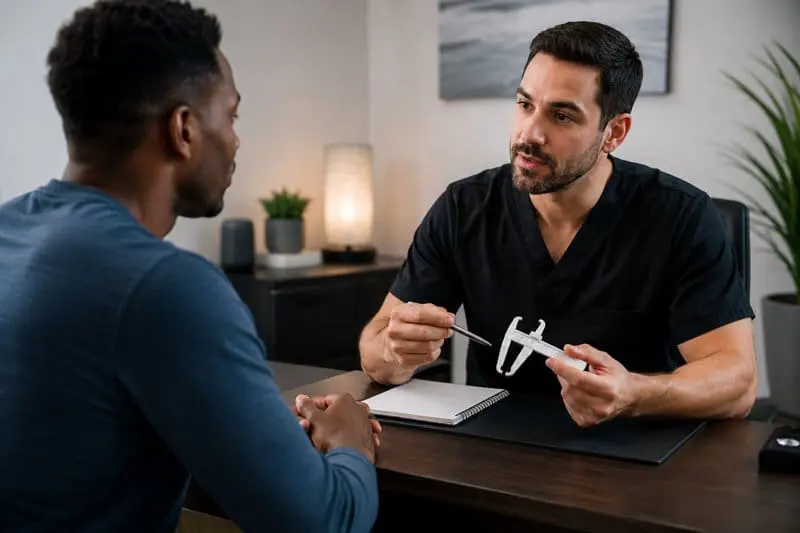
Consistent measurements can make a consultation with a provider who offers non-surgical penis enlargements more productive. You can share your baseline and goals in practical terms. That clarity helps keep the discussion grounded and personalized.
Ask your provider how they track outcomes and how they tailor a realistic plan for your anatomy. You’ll gain a clearer understanding without relying on hype or vague promises.
A Forward-Looking Way to Track Progress
Measuring well is a skill. Once you learn it, you can use it to make better decisions, ask better questions, and stay grounded in reality instead of comparison. With a consistent setup, your numbers become meaningful, and you spend less time second-guessing what you see.